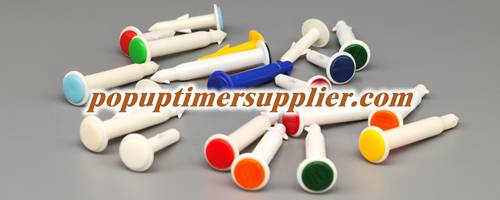
What Global Buyers Should Look for When Choosing a Disposable Pop-Up Timer Supplier
What Global Buyers Should Look for When Choosing a Disposable Pop-Up Timer Supplier
Selecting the right disposable pop-up timer supplier is an important decision for companies involved in food manufacturing, distribution, and private label products.
While many suppliers may offer similar products, professional buyers understand that supplier capability, manufacturing experience, and long-term reliability are key factors that influence purchasing success.
A suitable supplier should provide not only products, but also stable manufacturing support and professional cooperation.
Why Supplier Selection Matters in Disposable Pop-Up Timer Purchasing
Disposable pop-up timers are often purchased for commercial food applications where consistency and reliability are important.
The right supplier can help companies achieve:
- Stable product quality
- Reliable supply
- Efficient communication
- Better customization support
Choosing a supplier only based on price may create challenges in long-term cooperation.
1. Evaluate the Supplier's Manufacturing Experience
Manufacturing experience is one of the first factors buyers should consider.
Experienced suppliers usually have deeper knowledge of:
- Product structure
- Production processes
- Quality requirements
- Customer applications
Long-term manufacturing experience helps suppliers manage production challenges more effectively.
2. Check Whether the Supplier Specializes in the Product
Product specialization is often more valuable than a supplier offering many unrelated products.
A specialized disposable pop-up timer supplier can provide stronger support in:
- Technical communication
- Product improvement
- Customization projects
- Application solutions
Focused manufacturing often leads to deeper product expertise.
3. Understand Manufacturing Capability and Production Capacity
For bulk buyers, production capability directly affects supply reliability.
Important considerations include:
- Production stability
- Order handling capability
- Quality consistency
- Repeat order support
A supplier should be able to support both current requirements and future growth.
4. Review Product Quality Management
Quality management is essential for food-related products.
Professional buyers should understand:
- Material control
- Production inspection
- Performance testing
- Finished product checking
A reliable quality system helps ensure consistent product performance.
5. Confirm Technical Specifications Clearly
Before purchasing, buyers should confirm all important product specifications.
These may include:
- Activation temperature
- Product dimensions
- Materials
- Packaging requirements
- Application purpose
Clear technical communication reduces misunderstandings during production.
6. Evaluate OEM and Customization Capability
Many companies require customized solutions to match their market needs.
A capable supplier should support options such as:
- Custom temperature settings
- Custom appearance
- Private label packaging
- OEM production programs
Customization capability is especially important for brands and distributors.
7. Consider Export Experience and International Communication
International purchasing requires effective cooperation across different markets.
Export-experienced suppliers usually understand:
- International buyer expectations
- Documentation requirements
- Shipping processes
- Global communication needs
Good communication improves the efficiency of international sourcing.
8. Look Beyond Initial Product Pricing
The lowest quotation does not always represent the best purchasing value.
Professional buyers also consider:
- Quality stability
- Supply reliability
- Communication efficiency
- Long-term cooperation value
Total procurement value is usually more important than initial unit price alone.
9. Evaluate Long-Term Cooperation Potential
For companies with continuous demand, supplier relationships become increasingly important.
A strong supplier partnership can support:
- Future product development
- Repeat order efficiency
- Market expansion
- Supply chain stability
Long-term cooperation creates benefits for both buyers and manufacturers.
Common Mistakes Buyers Should Avoid
Some purchasing problems can be avoided through proper supplier evaluation.
Common mistakes include:
- Choosing only based on price
- Ignoring product specialization
- Not reviewing technical information
- Failing to discuss future requirements
A careful evaluation process helps companies select better suppliers.
A Practical Supplier Evaluation Checklist
Before cooperation, buyers should ask:
- How long has the supplier manufactured this product?
- Does the supplier focus on disposable pop-up timers?
- Can the supplier support OEM projects?
- How does the supplier manage quality?
- Can the supplier provide stable long-term supply?
These questions help buyers make more informed decisions.
Frequently Asked Questions
What makes a good disposable pop-up timer supplier?
A good supplier combines manufacturing experience, quality control, customization capability, and reliable communication.
Should buyers choose the cheapest supplier?
Price is important, but quality, reliability, and long-term value should also be considered.
Why is product specialization important?
Specialized suppliers usually have deeper technical knowledge and production experience.
Can suppliers provide customized pop-up timers?
Yes. Professional suppliers can provide OEM and private label solutions.
What should importers check before ordering?
Importers should review product specifications, quality systems, manufacturing capability, and supplier experience.
Why is communication important with overseas suppliers?
Clear communication helps prevent mistakes and improves cooperation efficiency.
How important is manufacturing history?
Manufacturing history provides confidence in supplier stability and product knowledge.
Can a supplier support long-term purchasing?
Experienced manufacturers can establish stable processes for ongoing supply programs.
Why evaluate OEM capability?
OEM capability allows companies to develop customized products for different markets.
What is the biggest mistake in supplier selection?
Choosing a supplier only by price without evaluating overall capability can create long-term risks.
Disclaimer: "Pop-Up Timer" and "Temperature Indicator" are generic industry terms used for disposable food temperature indication products. We are an independent China-based direct-source manufacturer specializing in disposable pop-up timers and temperature indicators since 2006. We are not affiliated with VOLK or any other third-party brand. Any brand references are provided only for identification and comparison purposes.