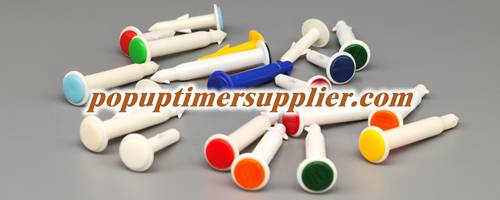
5 Key Questions Global Buyers Should Ask Before Purchasing Disposable Pop-Up Timers
5 Key Questions Global Buyers Should Ask Before Purchasing Disposable Pop-Up Timers
Choosing a disposable pop-up timer supplier is an important decision for companies involved in food processing, distribution, and retail supply.
Before placing a bulk order, professional buyers should carefully evaluate the supplier's manufacturing capability, product knowledge, and ability to support long-term cooperation.
Asking the right questions before purchasing can help companies reduce sourcing risks and select a supplier that matches their business requirements.
Why Asking the Right Questions Matters
Disposable pop-up timers are specialized temperature indication products used in food-related applications.
For commercial buyers, supplier evaluation should include more than price comparison.
Important considerations include:
- Product consistency
- Manufacturing capability
- Quality standards
- Customization support
- Supply reliability
A professional supplier should be able to provide clear answers and practical solutions.
Question 1: Are You a Manufacturer or a Trading Company?
The first question buyers should ask is about the supplier's actual role in the supply chain.
Understanding whether a company is a manufacturer, distributor, or trading company helps buyers evaluate:
- Production capability
- Customization ability
- Communication efficiency
- Supply control
For long-term B2B cooperation, many buyers prefer direct communication with the production source.
Question 2: How Long Have You Specialized in Disposable Pop-Up Timers?
Product specialization is an important indicator of supplier experience.
A manufacturer focused on one product category can develop deeper knowledge of:
- Product design
- Temperature indication technology
- Material selection
- Production processes
Long-term specialization often supports better technical communication and more stable production.
Question 3: What Product Specifications Can You Provide?
Before ordering, buyers should confirm detailed product specifications.
Important specifications include:
- Product size
- Button head color
- Activation temperature
- Activation accuracy
- Materials
- Packaging options
Clear specifications help ensure the product meets the intended application.
Question 4: Can You Support OEM Customization?
Many companies require customized products for their own brands or markets.
Buyers should ask whether the supplier can support:
- Custom colors
- Custom activation temperatures
- Logo injection molding
- Private label packaging
- Retail packaging solutions
OEM capability allows companies to develop products that match their business strategy.
Question 5: How Do You Maintain Product Quality?
Quality consistency is especially important for bulk purchasing.
Buyers should understand:
- Material selection
- Production control
- Inspection procedures
- Quality documentation
A reliable supplier should be able to explain how product consistency is maintained.
Additional Questions for Bulk Buyers
Large-volume customers may also consider additional questions related to supply capability.
- What is your production capacity?
- Can you support repeat orders?
- What packaging options are available?
- What export experience do you have?
- How do you handle customized projects?
These questions help buyers better understand the supplier's ability to support long-term cooperation.
Why Supplier Transparency Builds Trust
Professional B2B relationships are built on clear communication and transparency.
A trustworthy supplier should provide accurate information about:
- Product capability
- Manufacturing process
- Customization options
- Quality standards
Transparency helps both sides create stronger cooperation.
Choosing a Long-Term Manufacturing Partner
The best supplier is not always the one offering the lowest quotation.
Professional buyers usually consider overall value, including:
- Stable quality
- Reliable supply
- Technical support
- OEM flexibility
- Communication efficiency
A reliable manufacturing partner can become an important part of a company's global supply chain.
Frequently Asked Questions
Why should buyers ask questions before ordering?
Proper evaluation helps buyers understand supplier capability and reduce sourcing risks.
Should I work with a factory or trading company?
Many B2B buyers prefer direct manufacturers for closer communication and customization support.
Why is supplier specialization important?
Specialized suppliers usually have deeper product knowledge and manufacturing experience.
What specifications should buyers confirm?
Buyers should confirm size, temperature range, accuracy, materials, and packaging requirements.
Can disposable pop-up timers be customized?
Yes. Professional manufacturers can provide customized products and packaging solutions.
Why is quality control important for bulk orders?
Bulk buyers need consistent products across repeated production batches.
What makes a supplier suitable for international buyers?
Export experience, communication ability, production capability, and quality standards are important factors.
How can buyers evaluate a manufacturer's experience?
Buyers can review product focus, manufacturing history, certifications, and customer support capability.
Why is direct communication valuable?
Direct communication improves understanding of requirements and reduces unnecessary delays.
What is the goal of supplier evaluation?
The goal is finding a reliable partner capable of supporting long-term business growth.
Disclaimer: "Pop-Up Timer" and "Temperature Indicator" are generic industry terms used for disposable food temperature indication products. We are an independent China-based direct-source manufacturer specializing in disposable pop-up timers and temperature indicators since 2006. We are not affiliated with VOLK or any other third-party brand. Any brand references are provided only for identification and comparison purposes.